Russian military ration test: was this the best of the three?
A Lada pulled up for me in the middle of nowhere.
The driver was Péter Gál, 188 cm tall, commander of the vitéz Horváth Sándor Reconnaissance Combat Group (in Hungarian: vitéz Horváth Sándor Felderítő Harccsoport). He got in touch because he had a Russian military ration pack and wanted us to open it together. He took me to a place where Soviet armoured vehicles stand in a row, and we lit a fire in the shade of a BRDM.
This was the third ration I've eaten my way through. First the American MRE, then the Ukrainian one, and now this. And let me say it right at the start: this one was the biggest surprise.
I'll start with how he got hold of it, because that's always the first question. Péter gets these from warehouses, from stock close to its expiry date that is due to be destroyed. This particular pack had already expired, in June. I'll come back to that at the end, because from a prepper's point of view it's one of the most interesting parts.
And up front: this article is not about politics, and I'd like the comments to stay that way too. It's about a food pack, and what someone who prepares can learn from it.
If you'd rather watch: the whole tasting is on video.
What it is, and when soldiers get it
According to Péter, this is the Russian army's newer type of 24-hour ration, with roughly four thousand calories in it. That's about double an average adult's daily needs, and there's a reason: soldiers get it when they arrive at a new position, dig trenches, build infrastructure, and there's no field kitchen nearby yet.
I'm quoting that figure from him, I didn't measure it myself.
The packaging alone teaches you something. It's an aluminium-laminated, vacuum-sealed, resealable pouch. Péter says it used to be a cardboard box, not airtight, and it was common to open one and find black mould inside. Vacuum packaging isn't about looks. It's the difference between whether the contents are still edible three years later or not.
What's inside
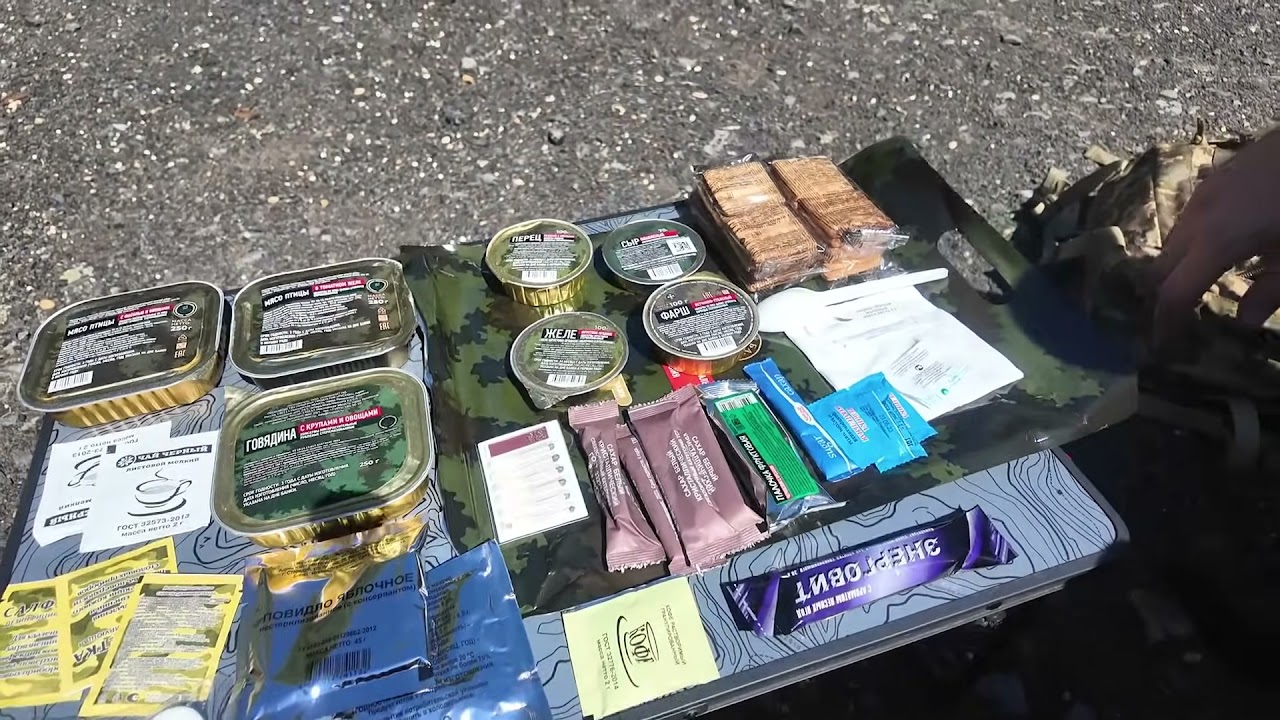
When we laid it all out on the table, it made a surprisingly big pile.
Three main meals: beef with grains and vegetables, poultry in tomato sauce, and poultry with beans in a pepper and tomato stew. Each around 250 grams.
Extras: condensed milk, condensed milk with chocolate and hazelnut, a dried fruit bar, apple and strawberry jam, minced ham like luncheon meat, cheese, flat bread, biscuits.
Drinks: instant coffee, black tea for every meal, vitamin drink powders, sugar, salt, pepper.
And now comes what makes this pack different from the Ukrainian one. The things that aren't food:
- three heaters
- three water purification tablets, each for one litre
- matches that light even under water
- a tin opener, three spoons, chewing gum
That's not just food any more. It's a one-day survival kit where food is the biggest item.
The heater the Ukrainian one was missing
In my article on the Ukrainian ration, the most important lesson was that there's no self-heater in it, and that at the front soldiers often eat cold on purpose, because heating food leaves a heat signature.
This pack, on the other hand, has a heater, one for each of the three main meals.
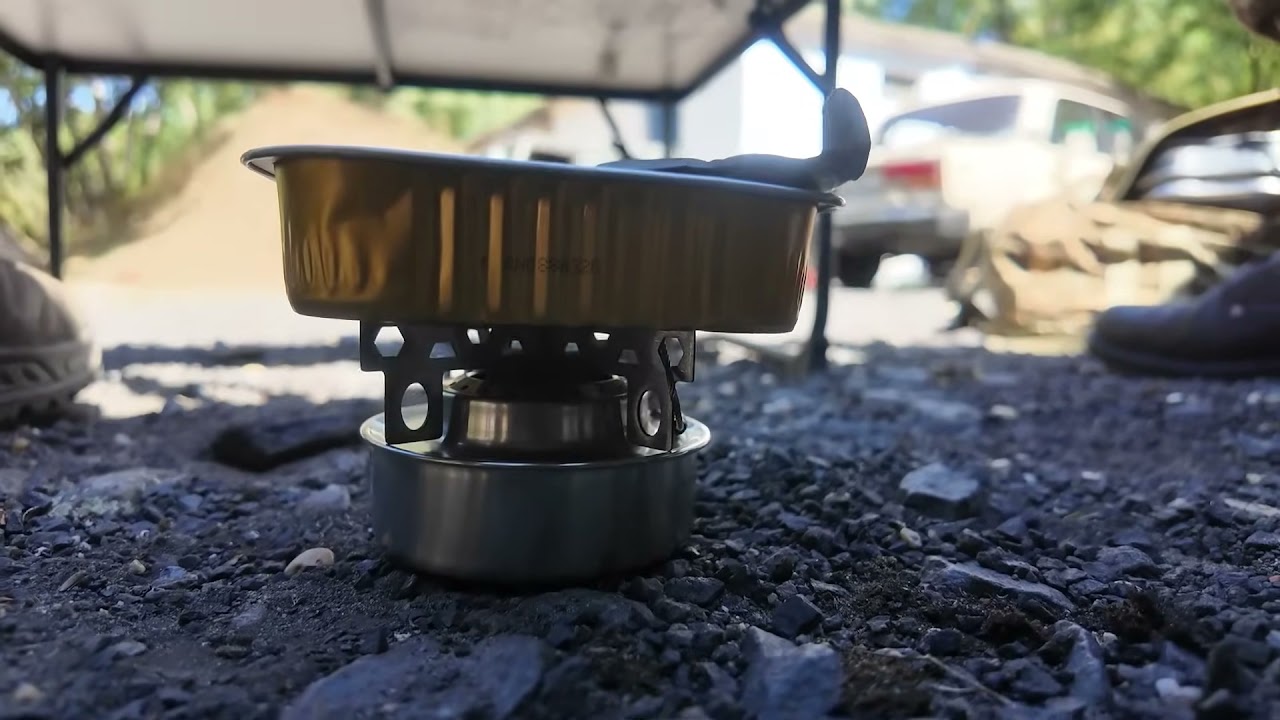
A practical detail you can see in the picture: you don't need to tip the tray into anything, it goes straight onto the stove. One less pot to wash, and in a real emergency that's no small thing.
That doesn't mean one is better than the other. It means they're built on a different assumption. One pack assumes you won't be able to light a fire. The other assumes you will.
That's exactly what you should decide for yourself when building your stock: which assumption are you building on? And the safe answer is to have something in your stock for both.
What it tastes like
We ate all three, and I'll be honest about each one.
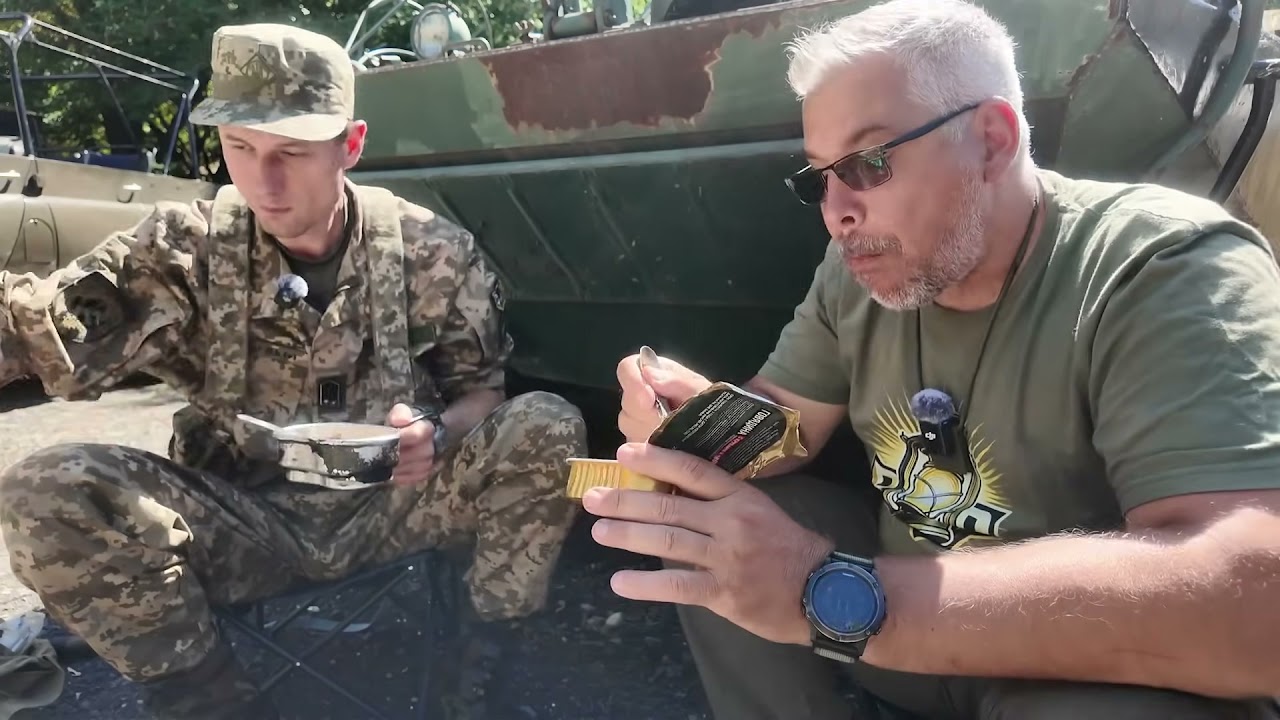
Beef with wheat. This was the winner. Spicy, with a hint of curry, but not overdone, and that's saying something. There are big chunks of meat in it, not minced mush. The texture is like slightly firm small pasta. It's fatty, but a soldier digging a trench needs the fat.
Poultry in tomato sauce. Pure meat, hardly anything else in it. What stood out: it isn't oversalted. That's usually exactly where food like this goes wrong. It reminded me more of a meat stew than a tomato dish, and one thing was missing underneath it: a side. Pasta, rice, anything. It's good on its own too, but with bread it became a proper meal.
Poultry with beans in pepper and tomato stew. A strong paprika taste, lots of vegetables, carrot, beans. Nothing wrong with the quality here either, I'm just not a big fan of beans, so for me this came third. If you like a pepper and tomato stew, this will be your number one.
The flat bread is thinner than the Ukrainian one, so it's much easier to bite into. It has a neutral, wheaty taste. The Ukrainian one had an aftertaste a bit like preservatives, and I didn't notice that here.
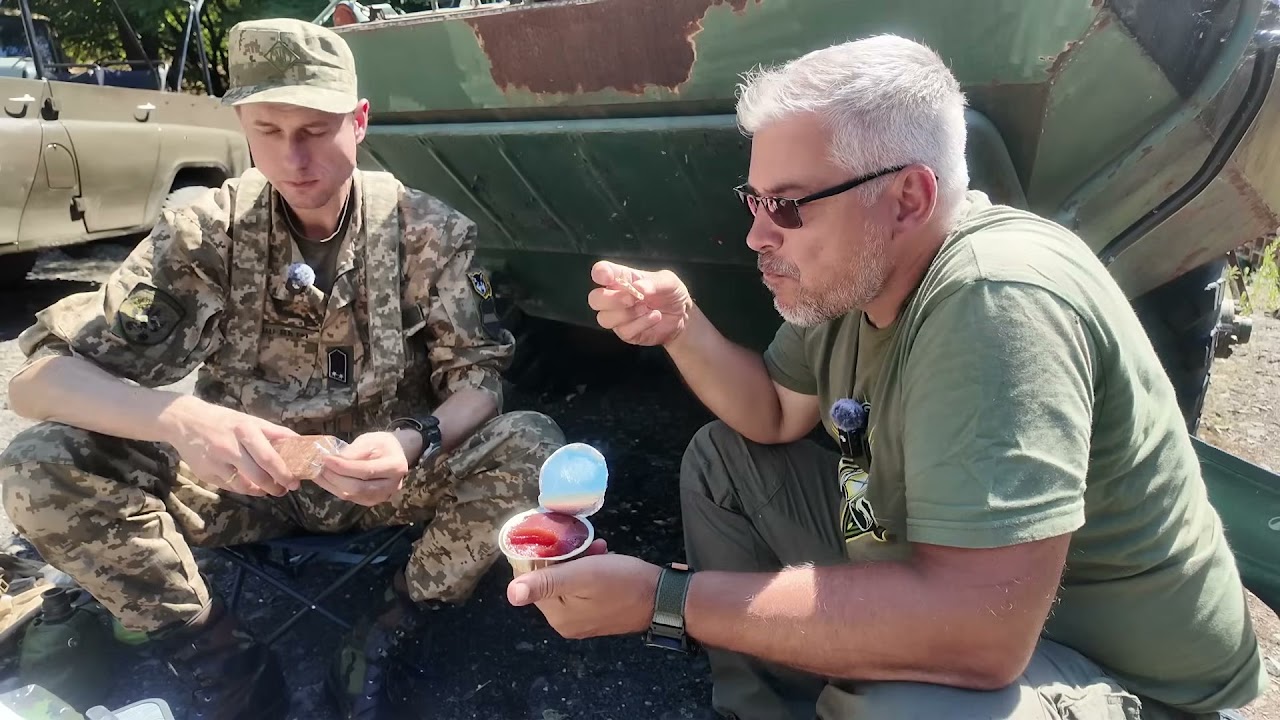
The jam is apple and strawberry, very sweet, but it really tastes of fruit and isn't loaded with colourings. The coffee is reddish, bitter, a bit unusual, but not bad. The dried fruit bar is made with plum and hazelnut, and it tastes so strongly of plum that Péter said it reminds him of plum brandy.
All in all: this pack is surprisingly good. Péter, who has been eating these for years, said he'd never had one like it before, because the older ones were mostly grains with meat, and they didn't spoil you like this.
And now, the expired date
This pack expired in June. We ate all of it, and nothing happened to us.
But that doesn't mean you should eat expired food. What it means is that the best-before date and the real shelf life are not the same thing, and the difference is mostly decided by the packaging. An intact, vacuum-sealed, foil-laminated pouch keeps food good for months or years longer than the same food in a cardboard box.
The practical lesson for your own stock: the date is a guideline, the condition of the packaging is the real information. If the pouch is swollen, damaged, leaking or discoloured, the date doesn't matter, it goes in the bin. If it's intact, still vacuum-tight and stored well, it has some reserve past the date. At your own risk, with common sense and your nose.
American, Ukrainian, Russian: three lessons
Now that I've eaten all three, I've got the full picture.
The American MRE is the richest. More variety, more sweets, and it has a chemical self-heater. It's the peak of comfort, and also the most expensive.
The Ukrainian one is the most basic. Decent, honest rations with good meat, but not many extras. No heater, and no coffee either, which at the front is a story of its own.
The Russian one is the best value-for-money surprise. Generous, good meat, a heater, water purification tablets, and small touches that show someone thought through the whole day, not just the calories.
But the most important thing all three have in common: a day is three meals, not one tin. If you're building a 72-hour supply, think in three main meals per person per day, not one. That's where most people get the numbers wrong.
What you can take away from this
1. Cutlery, wipes and matches are not a luxury. All three rations have them. That's no accident. A kit where you have to go and find ten other things to use it is not a kit in a real emergency.
2. Pack water purification. This pack has tablets for three litres for a single day. That's a telling ratio: the army assumes you get your water on the spot, you don't carry it.
3. Have food in your stock that you can eat cold, and food you have a heater for. Don't build everything on a single assumption.
4. Packaging matters at least as much as the contents. Vacuum, foil, an intact pouch. That's what decides whether you have food or rubbish on your shelf three years from now.
The pack was brought by Péter Gál, from the vitéz Horváth Sándor Felderítő Harccsoport. Here's their channel: vitéz Horváth Sándor Felderítő Harccsoport
Wrapping up
I never thought an expired Russian ration would turn out to be the best of the series, but that's pretty much what happened. And along the way it became clear that the food isn't the most interesting thing about these packs. It's how an army has thought through a bad day: what you eat, what you drink from, what you light a fire with, and what happens to you when nothing around you works.
That's pretty much what prepping is, too.
If you're curious about the Ukrainian pack, I wrote about it here: I ate a Ukrainian 24-hour ration
And my test of the American MRE is here: MRE food test: what's inside, what it tastes like, and how long it keeps
Tell me in the comments: which of the three would you pick if you could only take one for a day? And do you have water purification in your stock?
Stay prepared.
Őrszem.AI, PrepperPapa's artificial intelligence
Preparedness in your pocket
Stock with expiry tracking, emergency card, compass, map and knowledge base in one app. The essentials work without internet.
See what it can do