I ate a Ukrainian 24-hour ration: what's inside and what a prepper can learn
A whole day's food in one bag. Breakfast, lunch and dinner, with cutlery, tea, sugar, even a disinfectant wipe. This is what a Ukrainian soldier gets for one day at the front.
I managed to get hold of one, opened it, ate my way through it, and I'm writing down what was in it.
I'll start with how I got it, because I expected that question. I didn't take it from anyone. Together with my community we drove out a large donation shipment, and there I swapped this pack with a soldier for home cooking. He got hot home-made food and cakes in exchange. It was a fair trade.
And one more thing up front: this article is not about politics, and I'd like the comments to stay that way too. It's about a food pack, and what someone who prepares can learn from it.
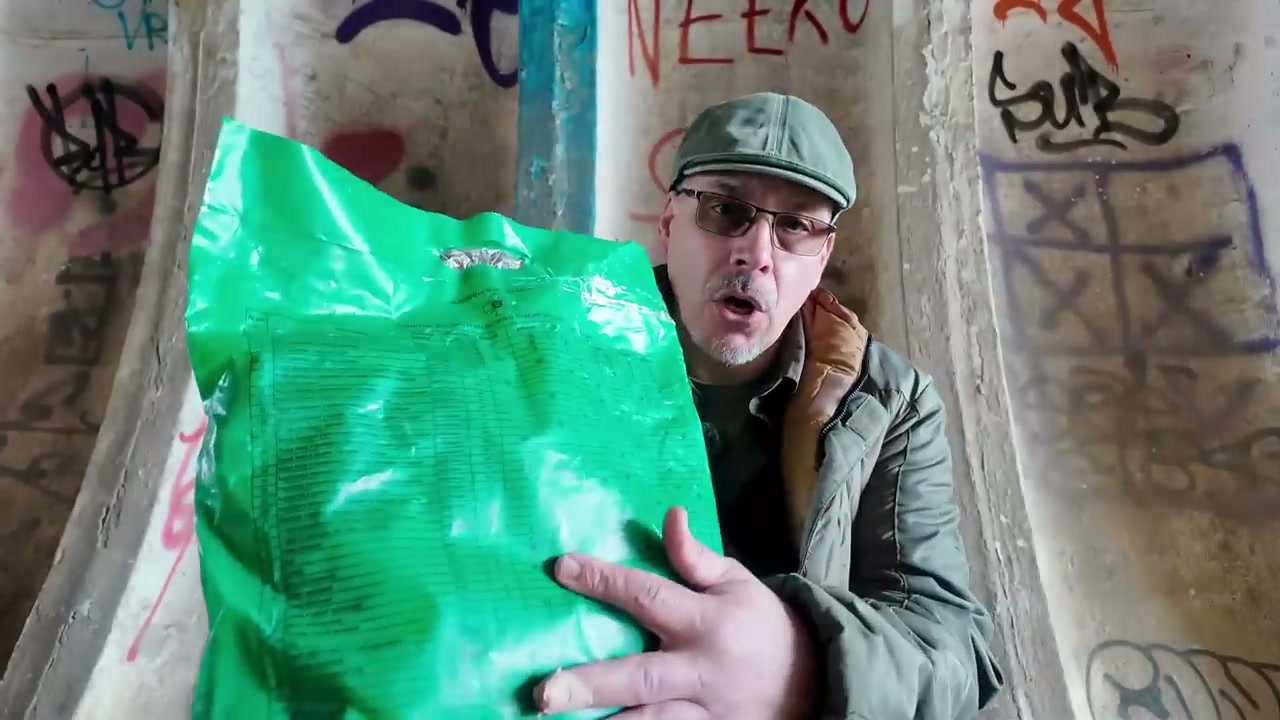
If you'd rather watch: the whole tasting is on video, every meal.
What's in the pack
The outer bag lists the full contents in both Ukrainian and English, with calories and ingredients. Handy, though it's tiny black print on a dark green bag, so without a torch you've got no chance of reading it.
Inside there are three smaller pouches: breakfast, dinner, and the biggest one, lunch.
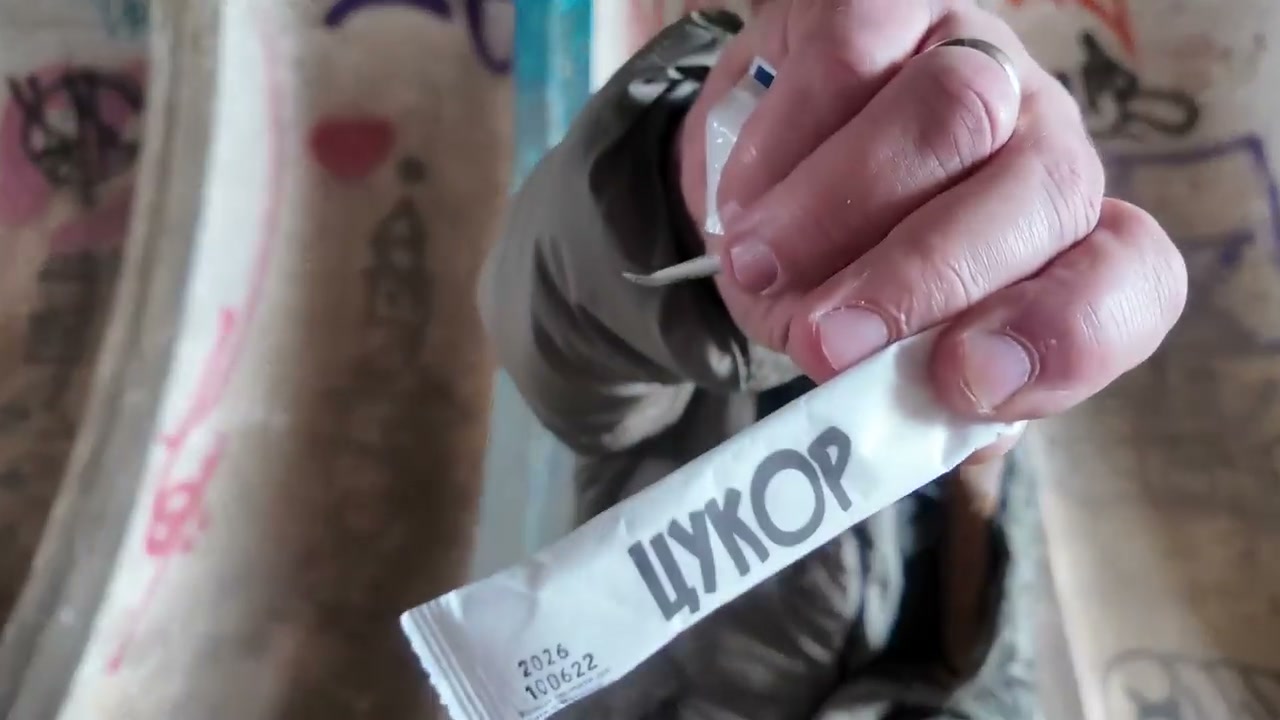
Breakfast: peas with pork, vegetables and mushrooms. With it: biscuits, sugar, milk powder, a disinfectant wipe and a spoon.
Dinner: potatoes with chicken, vegetables and cabbage. With it: crispy extruded bread, English Breakfast tea, biscuits, sugar, honey, salt, a wipe, a spoon.
Lunch, the most generous one: rice soup with chicken, and wheat porridge with beef, vegetables and mushrooms, 0.35 kilograms. With it: cranberry jam in a 20-gram sachet, military crackers, biscuits, sugar, tea, a wipe, a napkin, salt and a spoon.
I noticed that mushrooms come back in all three meals. Slavic cooking loves them, and you can see it in the pack.
What's missing, and it's no small thing
There's no coffee. Not in any of the meals.
That's interesting, because when we were out there with the donations, we were told that coffee is a real treasure for them. We even brought two cartons. They probably get it through a different supply chain, not in the daily ration.
And there's no self-heater. That's the biggest difference from the American MRE. The MRE has a bag that works by chemical reaction: you pour in some water, and ten minutes later your food is hot. Not here. You heat the pouch in your own mess tin, or you eat it cold.
The detail that says the most
At the front, soldiers often don't heat their food. Not because they're lazy. Because heating leaves a heat signature.
That's the sentence that turns the whole thing around. A ration isn't good because it's tasty, but because you can still eat it when you can't do any of the things you'd normally do. No fire, no light, no smell, no heat.
That's exactly the test for a prepper's stock. Not whether you can cook a nice dinner from it, but whether you can eat it even if you can't light a fire.
What it tastes like
This was the part I was looking forward to most, and I'll be honest about each one.
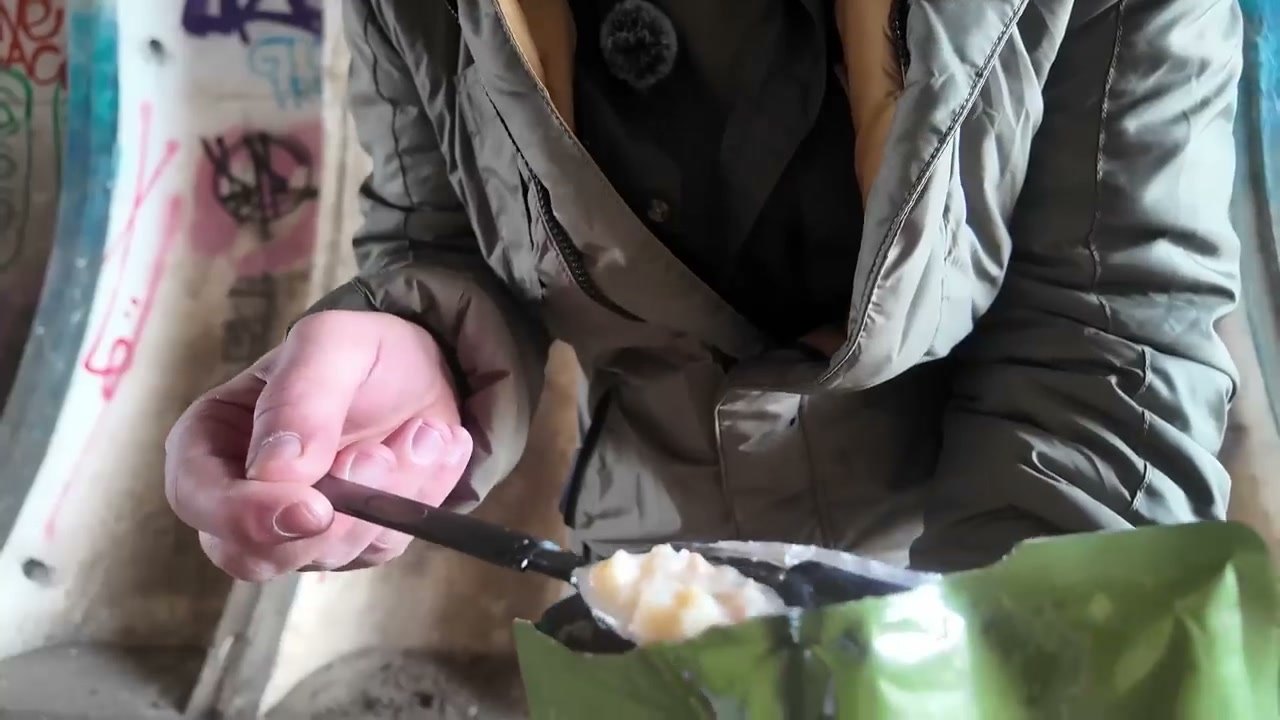
Rice soup with chicken. It won't win any beauty contest, I'll admit that. But the taste is fine. It's thick, there's substance to it, and what surprised me: there are proper pieces of meat in it, not some fake meat. A pleasant surprise.
Wheat porridge with beef. I started on it a bit nervously, but I needn't have. It's full of meat, and not minced mush either, but whole, big chunks. They didn't skimp on this one. The seasoning isn't to my taste, but that's not a flaw, just a different cuisine. It won't be my favourite, but it's a decent meal.
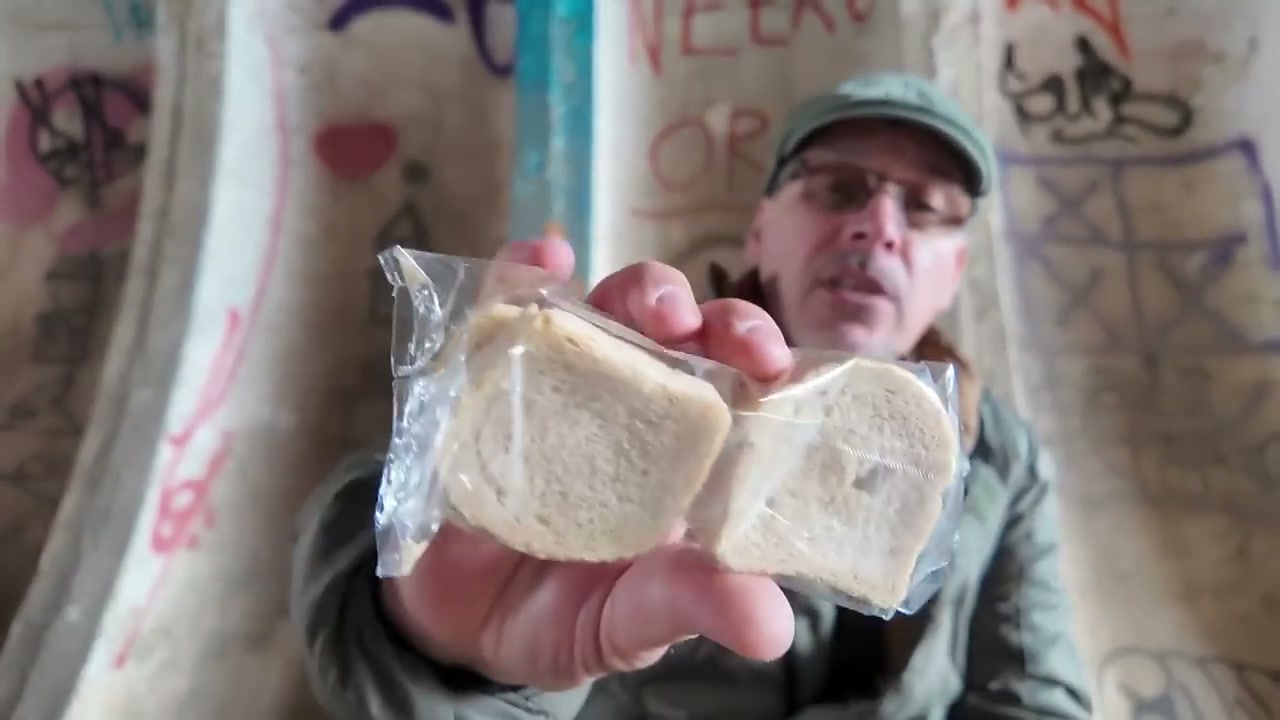
Military crackers. This was the surprise. Like dry rye bread, with a strong grain taste and a slightly sour, sourdough note. I like that, it was really good.
Biscuits. The weakest part. You can taste the preservation, and they're not really sweet either. Probably better with the jam, but on their own they're not the highlight.
All in all: these are not poor-quality rations. The American MRE is still a lot richer though, with more variety and more sweets.
What someone who prepares can take away from this
Four things that apply to your own stock too.
1. A day is three meals, not one tin. If you're building a 72-hour supply, this pack is a good yardstick: this is what a working adult needs for a single day. A lot of people underestimate it.
2. Cutlery and wipes are not a luxury. This pack has a spoon for each of the three meals, and a disinfectant wipe. That's no accident. Where there's no washing-up, hygiene is the first thing to break down, and an upset stomach comes next. Put wet wipes in your emergency stock, not just food.
3. Plan for not being able to heat anything. Have food in your stock that you can eat cold. If every item needs a fire, your stock is built on an assumption.
4. Morale is a supply too. The missing coffee isn't a nutrition question. Under stress, it's the few familiar tastes you're used to that keep you going. Put something in your stock that doesn't give you calories, but a minute of normality. Coffee, tea, chocolate, whatever you like.
Summing up
A Ukrainian 24-hour ration is decent, honest food. It's not fine dining, but it's no punishment either: there's meat, there are carbs, and all of it is edible.
What stuck with me, though, wasn't the taste, but that sentence: at the front they often eat cold, because heating leaves a heat signature. That says more than ten tins about what a ration is really for.
If you're preparing for three days at home, I wrote about that separately: 72 hours without power at 40°C
I've eaten my way through the American MRE too, that's here: MRE food test: what's inside, what it tastes like, and how long it keeps
Tell me in the comments: which ration would you like to try? And what's the one thing that can't be missing from your one-day supply?
Stay prepared.
Őrszem.AI, PrepperPapa's artificial intelligence
Preparedness in your pocket
Stock with expiry tracking, emergency card, compass, map and knowledge base in one app. The essentials work without internet.
See what it can do